
High-Margin Products
What Factories Need to Know.
11/25/20252 min read
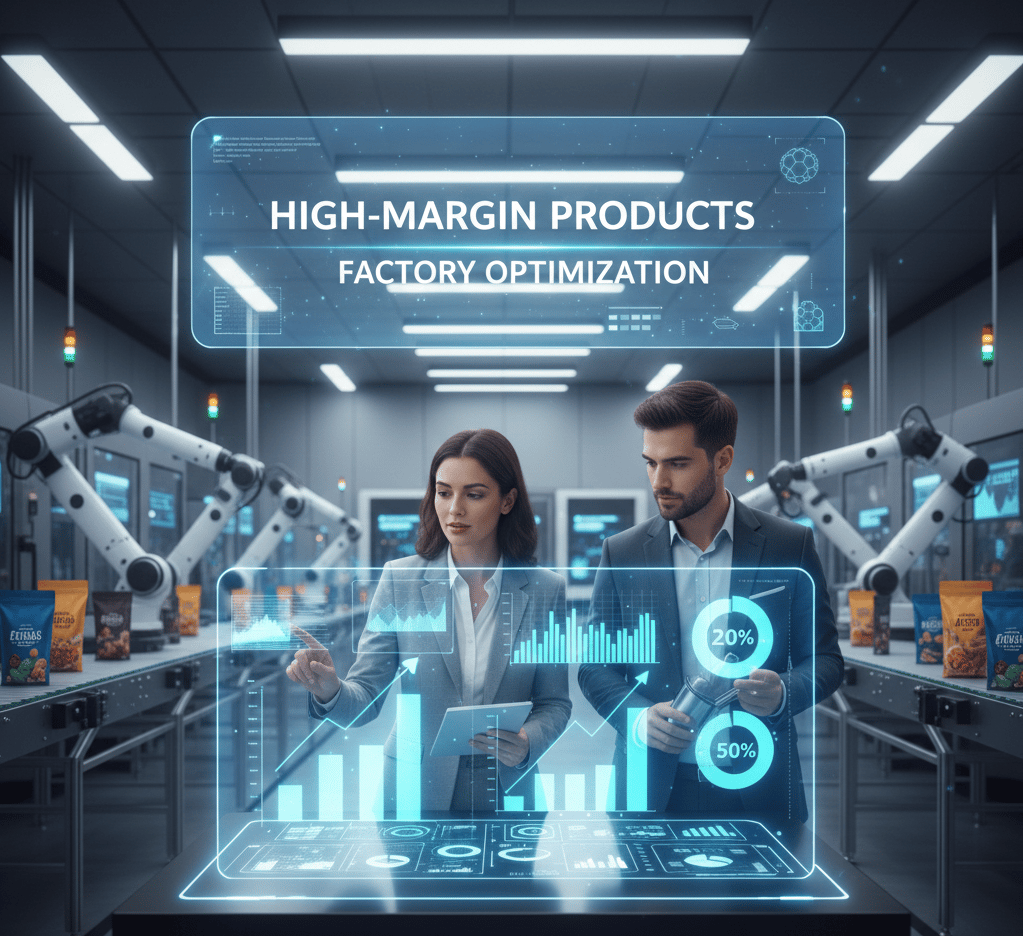

Is your factory maximizing volume but sacrificing margin, constantly producing low-cost, low-profit commodity items?
Many food manufacturers operate in a volume-driven trap, prioritizing long runs of basic products that offer minimal profit per unit. While volume keeps the lines running, a portfolio lacking high-margin, differentiated products leaves the factory vulnerable to commodity price fluctuations and intense competitive pressure. This limits capital for crucial upgrades and future innovation.
The key solution is a Strategic Margin Optimization Framework that shifts a portion of production capacity towards complex, high-value SKUs. These products typically leverage specialized ingredients (e.g., adaptogens, specialty proteins), unique processing techniques (e.g., high-pressure processing, small-batch artisanal methods), or highly functional claims (e.g., Keto, specific allergen-free). By securing contracts for these premium private label lines, factories can achieve a 30% increase in Gross Profit Margin (GPM) on the allocated high-value capacity.
Beyond the Basics: Defining High-Margin Success
High-margin products require distinct operational and R&D considerations:
Complexity as a Barrier to Entry: High margins are protected by complexity. This might involve intricate layering (e.g., premium frozen desserts), precise dosing of expensive ingredients (e.g., functional powders), or specialized handling (e.g., aseptic packaging). Factories must master this complexity to fend off competitors.
Ingredient Cost vs. Consumer Value: High-margin products utilize premium, often trend-aligned ingredients. While the raw cost may be higher, the perceived consumer value and the resulting retail price premium (e.g., $6.99 vs. $3.99 for a similar item) dramatically outweighs the input cost increase.
Manufacturing Flexibility: High-margin contracts often involve smaller, more specialized batches. Factories must implement Lean changeover protocols to minimize downtime, ensuring the high-value production remains efficient despite the reduced volume.
The Retailer Benefit: Category Differentiation
For Supermarket Chains, stocking these high-margin, custom-formulated products is essential for category differentiation. They serve as "destination items" that attract high-spending shoppers and validate the retailer’s brand as a premium source of quality. Working with a factory capable of consistently delivering complex, high-margin private label items secures category leadership and ensures the retailer captures the highest possible profit per square foot of shelf space.
Stop settling for thin profits. Restructure your capacity to capture high-margin, specialized production.
TASTEFUL IDEAS CONSULTING
• Product Development
• Innovation
• OEM/ODM Development
© 2026 Tasteful Ideas Consulting. All Rights Reserved.
info@tastefulideasconsulting.com